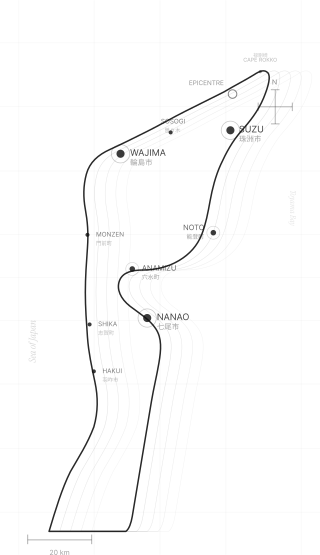
The Noto Peninsula, the largest on the Sea of Japan, spans 2,404 square kilometers across 13 municipalities in central Honshu. Renowned for its hot springs, artisan crafts, and fertile land supporting rice, seafood, and livestock cultivation, the region has sustained a model of ecological coexistence for over 6,000 years — recognized as a Globally Important Agricultural Heritage System (GIAHS) in 2011.
Like much of rural Japan, Noto has faced depopulation and declining local industry as younger residents migrate to cities. These existing vulnerabilities were compounded in 2024 by a destructive January earthquake and tsunami, followed by severe September flooding and landslides.
Despite slow recovery, local resilience offers a path toward renewal. Noto's rebuilding effort can serve as a model for sustainable regional revitalization — using thoughtful urban planning to create equitable infrastructure that attracts new residents and restores long-term vitality to the region.
能登半島は日本海に面する最大の半島で、本州中央部の13市町にまたがり、面積は2,404平方キロメートルに及びます。温泉、職人による工芸、そして米・海産物・畜産を支える肥沃な土地で知られ、6,000年以上にわたって自然との共生モデルを育んできました。2011年には世界農業遺産(GIAHS)に認定されています。
日本の多くの農村地域と同様に、能登も若い世代の都市への流出により、人口減少と地場産業の衰退に直面してきました。こうした既存の脆弱性は、2024年の元日に発生した壊滅的な地震と津波、そして9月の豪雨による洪水と土砂崩れによって、さらに深刻化しました。
復興は緩やかながらも、地域のレジリエンスは再生への道を示しています。能登の復興の取り組みは、持続可能な地域再生のモデルとなり得ます — 思慮深い都市計画によって公平なインフラを築き、新たな住民を呼び込み、地域に長期的な活力を取り戻すのです。